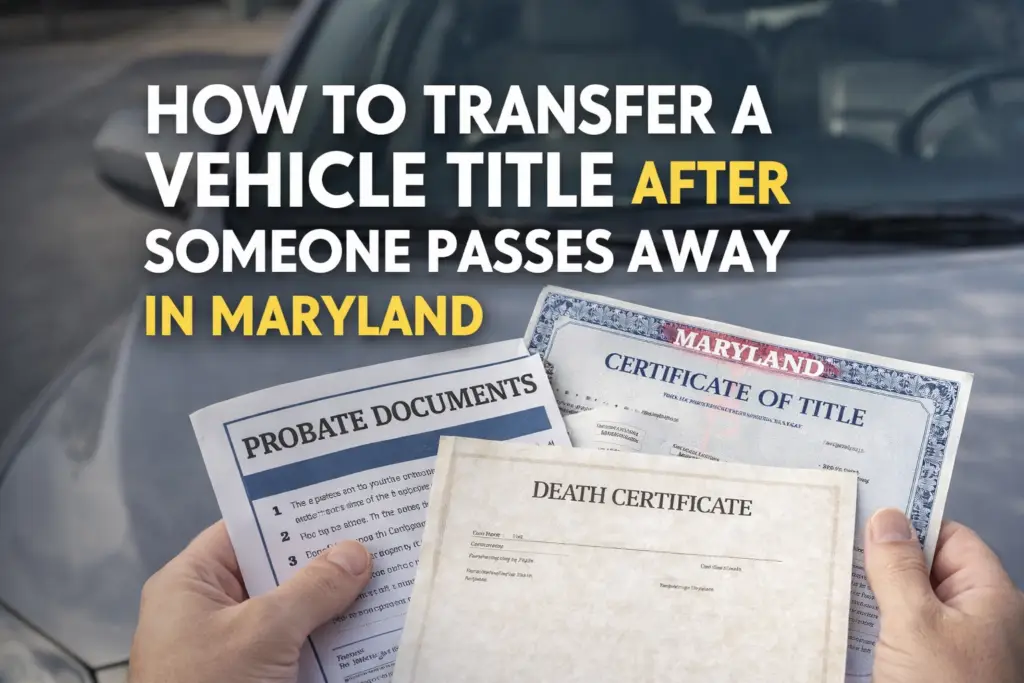

When a vehicle owner passes away, the vehicle does not automatically transfer to a family member — even if everyone agrees who should receive it.
In Maryland, a vehicle title can only be transferred by someone who has legal authority through the estate. That authority must be documented before the Motor Vehicle Administration (MVA) will issue a new title.
This guide explains what documents are typically required, common scenarios, and how to avoid delays.
Step 1: Determine Who Has Legal Authority
Before any title paperwork is signed, you must determine:
- Was there a will?
- Has the estate been opened with the Register of Wills?
- Is there a court-appointed personal representative?
Only a court-appointed representative — or a person legally entitled under Maryland estate rules — may sign on behalf of a deceased owner.
If no one has been appointed yet, the estate may need to be opened first.
You can find official estate information through the Maryland Register of Wills website:
https://registers.maryland.gov
Step 2: Understand the Ownership Situation
The process depends on how the vehicle was titled.
If the Vehicle Was Solely in the Deceased Person’s Name
Most cases require:
- Certified copy of the death certificate
- Letters of Administration (or Letters Testamentary)
- Original Maryland title (if available)
- Application for Certificate of Title (VR-005)
The personal representative signs the title and application on behalf of the estate.
If the Vehicle Was Jointly Titled
If the vehicle was owned as joint tenants with right of survivorship, the surviving owner may be able to retitle the vehicle with:
- Death certificate
- Original title
- Completed VR-005
However, documentation still matters. The MVA must see proof of survivorship.
If the Estate Qualifies as a Small Estate
Some estates qualify under Maryland’s small estate rules, which may simplify the documentation required.
In those cases, documentation from the Register of Wills confirming small estate status may replace full probate letters.
The exact documents depend on the estate value and court filing.
Step 3: Gather Required Documents
While every case is different, most transfers require:
- Original Maryland Certificate of Title
- Certified death certificate
- Court-issued Letters of Administration or Small Estate documentation
- Completed Application for Certificate of Title (VR-005)
- Odometer disclosure (if applicable)
- Lien release (if the vehicle had a loan)
- Insurance Lapse Flag must be removed previously
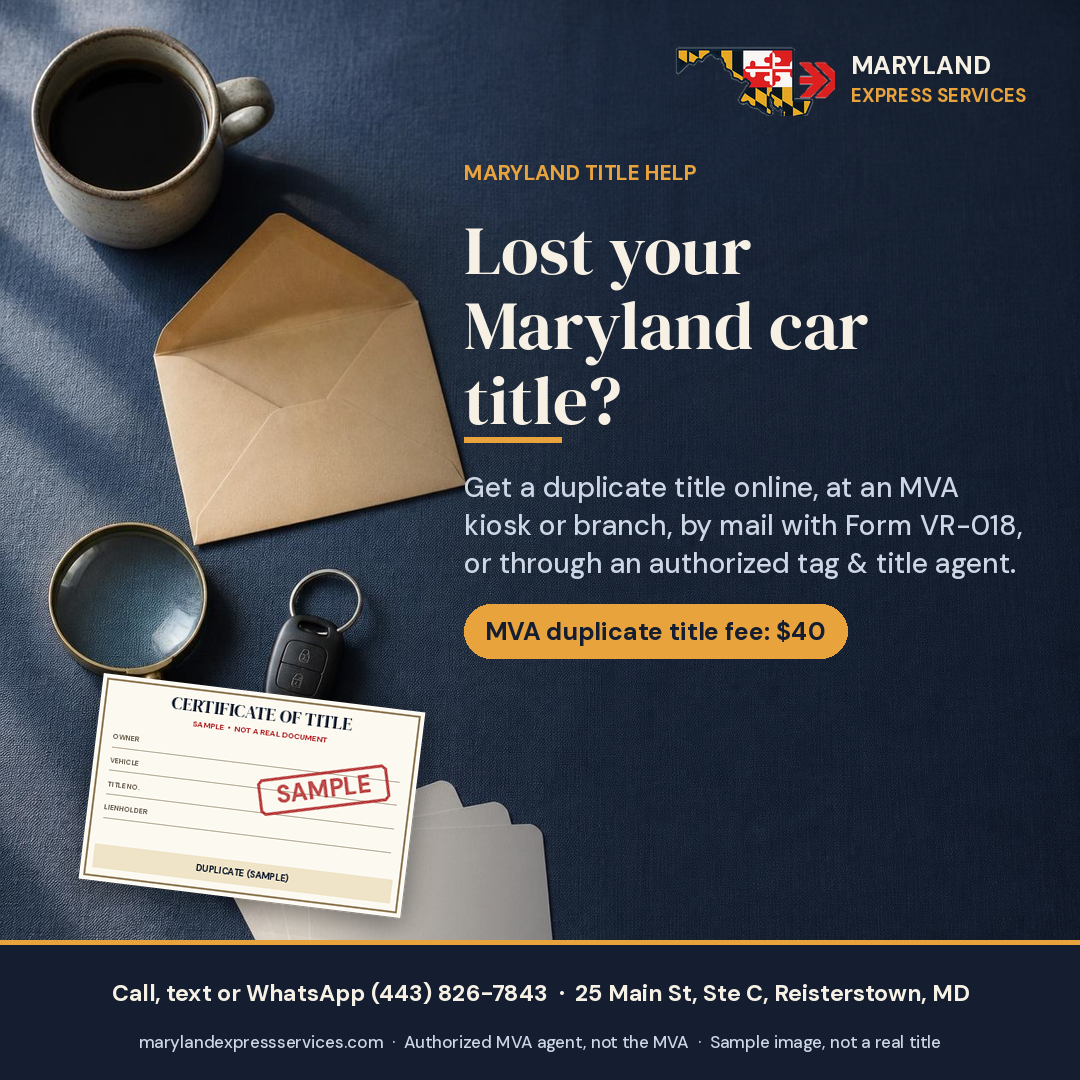
If the original title is lost, a duplicate title process must be completed by the estate representative.
Common Situations That Cause Delays
We frequently see avoidable issues such as:
- Family members signing the title without court authority
- Attempting to sell the vehicle before estate transfer
- Trying to remove a deceased owner using a duplicate title form
- Multiple heirs assuming only one signature is needed
- Not providing full probate documentation
The MVA will not issue a new title without proper legal authority.
Use the MES Decision Tool
If you’re unsure what applies to your situation, we created a guided tool to help you determine the most likely documents needed.
👉 Maryland Vehicle Transfer After Death – Decision Tool
Answer a few questions to see the most likely documents and next steps for your situation (Maryland MVA):
https://marylandexpressservices.com/vehicle-transfer-after-death-maryland/
This tool walks through common estate scenarios and provides general guidance based on your answers.
Useful links:
Removing a Co-Owner From a Maryland Vehicle Title: Fees, Forms, and Common Traps Explained
Maryland MVA Flag Codes Explained
Shared on Google Business Profile
Important Note About Legal Advice
Vehicle title transfers after death involve estate law. We process title transactions in accordance with Maryland MVA requirements, but we do not provide legal advice.
If there is uncertainty about probate, heir rights, or estate authority, it may be necessary to consult the Register of Wills or an attorney.
Official MVA titling information is available here:
https://mva.maryland.gov/vehicles/Pages/registration/title-registration-info.aspx
Frequently asked questions
Who signs the title if the owner is deceased?
Only the court-appointed personal representative (executor or administrator) may sign on behalf of the deceased owner. If no representative has been appointed, the estate may need to be opened first.
Can a surviving spouse just sign the title?
Not unless the vehicle was jointly titled with survivorship rights. If the vehicle was solely in the deceased spouse’s name, estate documentation is required.
Do all heirs need to sign?
If there are multiple heirs and the vehicle passes through probate, the personal representative handles the transfer. Heirs do not independently sign unless required by estate documentation.
What if the title is lost?
The estate representative must apply for a duplicate title before the vehicle can be transferred. Authority from the estate is still required.
Is an inspection required to transfer the title?
An inspection is not required solely because of the owner’s death. However, inspection may be required if the vehicle is being registered, retitled from out of state, or changing registration class.
Can the vehicle be sold before transferring the title?
In most cases, the estate representative must first establish authority. Selling a vehicle without proper estate documentation can delay the transaction.
Final Thoughts
Transferring a vehicle title after someone passes away is not simply a signature issue — it is an estate authority issue.
The most important principle is this:
The person signing must have documented legal authority to act for the estate.
Once that authority is established, the title transfer process itself is straightforward.
If you are unsure what applies in your situation, use our decision tool above or confirm documentation requirements before submitting paperwork.