Learn which U.S. states require notarized vehicle titles and why. Discover how notarization adds protection during title transfers and car sales
What Does It Mean to Notarize a Title?
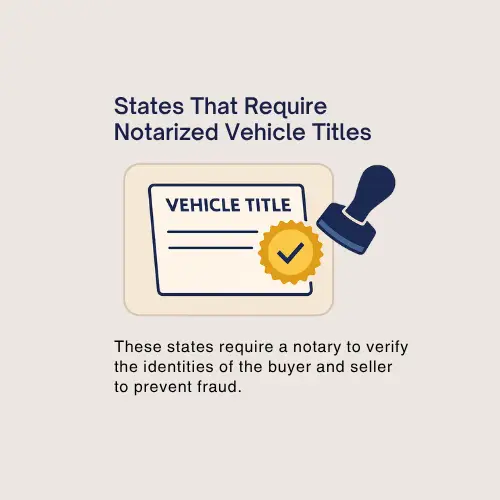
When a vehicle title is notarized, a licensed notary public verifies the identity of the person signing it and witnesses the signature. The notary then applies an official seal to the document. This step adds a legal layer of protection for both parties — confirming that the person selling or transferring the vehicle truly is who they claim to be.In other words, notarization protects buyers from fake sellers and protects sellers from claims that a transfer never happened. It’s a safeguard against identity theft, title washing, and disputes after a sale.
States That Require Notarized Vehicle Titles
As of 2025, the following U.S. states require notarization of vehicle titles under certain conditions (usually for private sales, duplicate titles, or out-of-state transfers):
- Arizona — Seller’s signature must be notarized on the title.
- Hawaii — Notarization required for private sales only.
- Kentucky — Buyer and seller signatures must be notarized.
- Louisiana — Titles must be notarized to be legally binding.
- Montana — Notarization required for both parties.
- North Carolina — Both signatures must be notarized; strict enforcement.
- Ohio — Seller’s signature must be notarized; buyers often recommended to do so as well.
- Oklahoma — Seller’s signature must be notarized.
- Pennsylvania — Notarization required for all title transfers.
- Wyoming — Seller’s signature must be notarized.
Some states, such as
Alabama,
Mississippi, and
West Virginia, have optional notarization for certain private transactions, while others, like
California or
Florida, do not require it at all.
Why Maryland Doesn’t Require It (But You Still Might)
Maryland does
not require a notary to witness title transfers. However, if a title comes from a state that
does require notarization, it must follow that state’s rules before being accepted in Maryland. That’s where an
authorized tag and title agent like
Maryland Express Services (MES) becomes essential.At MES, we help verify title documentation, notarize signatures when required, and ensure every step complies with Maryland and out-of-state laws — so your transfer isn’t delayed or rejected by the MVA.
When in Doubt, Get It Notarized
Even if your state doesn’t require notarization, it’s often a good idea to do it anyway. A notary’s stamp turns a handshake deal into a legally solid transaction. It’s inexpensive, fast, and prevents future disputes.At MES, our
Notary and Identity Services can authenticate your signatures and make your vehicle transaction secure and compliant — all in one visit.
References
Article prepared by Maryland Express Services (MES), an MVA-authorized tag and title agent located in Ellicott City, Maryland.Last updated: October 2025